

Stranger Things
“You can learn a lot from strangers if you just listen.”
I did not set out to build a thread through this dispatch, not least one of strangeness. But my writing and curating sometimes has its own mind, that is revealed to me only when I submit to it. It can sound strange, I admit.
*Opening quote from the wonderful film Before Sunrise. Also, this menu looks longer than the dispatch is!
Strangers, but not strange: A beautiful little podcast.
Stranger Twins: A multi-year project of lookalikes.
Familiar Strangers: You only live once.
Strange terms: When granny comes in a red car.
Violent Strangers: To value freedom of expression.
Strangers from another world: A new docu on non-human intelligence.
With: AI choosing gibberish, Singlish in the Oxford dictionary, the openness of strangers.
1. Strangers, but not strange
Our lives go from one day to the next, sometimes flowing gracefully, other times bumbling along, often careening ahead, propelled by forces we don’t even pause to consider.
Life demands what it will. Mundanity builds paths. Intentionality leads some steps. Stimulation dances at us like swordplay. Atoms of information bombard us in their trillions.
In this swirling mass of beauty and data and busyness and sameness and sparkle, sometimes one is made to pause by something real, something deeply human.
As with many lovely things in life, an accident of creative scatterings helped me stumble on to Strangers On A Bench. An illustrator’s art shone in a place meant for streaming music. It spurred a curious look. A curious tap. And another.
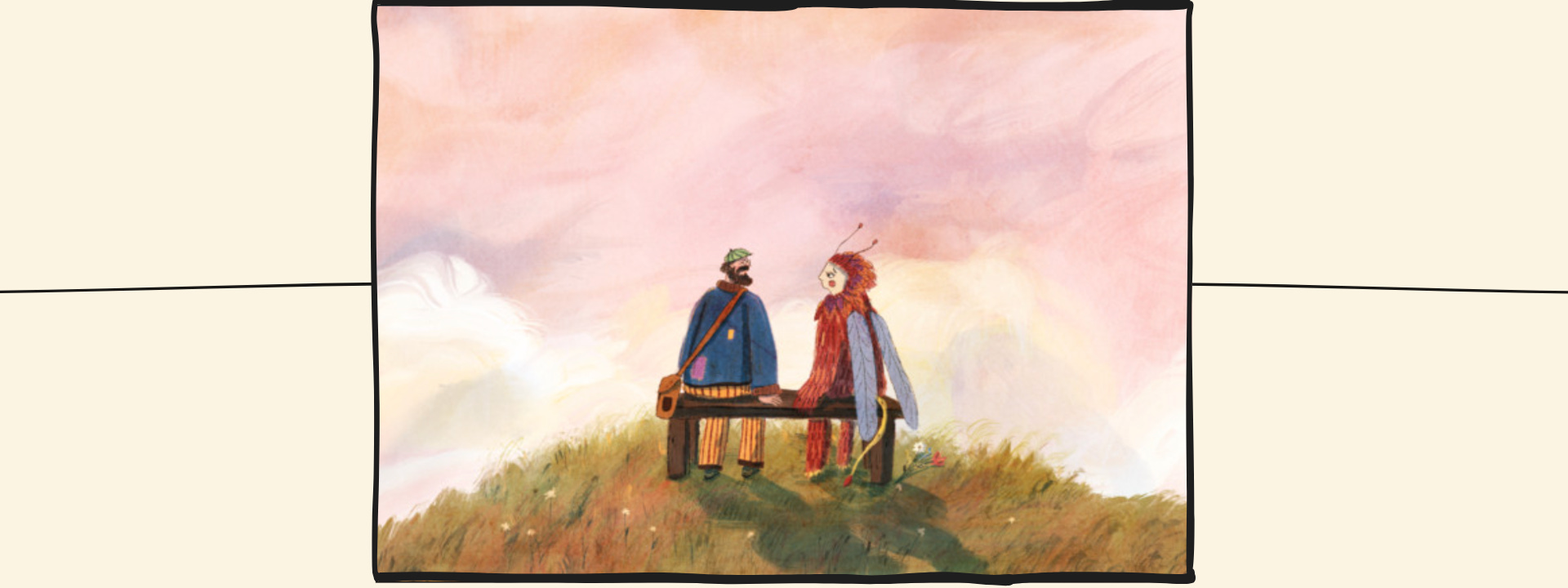
Tom Rosenthal approaches a stranger on a park bench and asks if he can sit down next to them and record their conversation.
That’s all there is to every episode description of this charming podcast.
Rosenthal, a singer-songwriter, has now spent the last six or seven months strolling through London parks, asking random people parked on benches, if he can have a chat.
What ensues is a gently-led conversation, bobbed along by whatever might come up. It takes stray turns and distracted meanders and impulsive dives that feel like warm handshakes, or knocks on a wooden door, or friendly prods, or caresses, or softly opening windows.
Tom takes his time, letting the conversation do the same. The result is something nebulous, but persistently charming. Real, interested, honest. Conversation approached with a warmth and sincerity you can feel, almost touch. All this gives it the ability to be light or layered or pensive or mundane, sometimes all in the same pod.
But most of all, it makes it so fundamentally human.
I feel sometimes like I’m there at that bench too, listening to the chirp of birds, children laughing, a man shouting, a passing cyclist. I picture the brown wooden bench, the park that’s an urban oasis. I hear the breeze flutter, as pauses allow for thought, both theirs and mine.
Its sincerity, the lack of any veneer, is disarming. You can feel it, as the strangers speak, listen, share; opening up. Sometimes slowly, sometimes all in a rush. The anonymity, the unknown interviewer, the lack of strings attached… it seems to relax people, to coax a surprising intimacy. (Tom himself does not know their names and identities.)
With some, it feels like they’ve ben waiting to chat, others surprise themselves by finding a garrulous side. Some have so much to share, others ruminate as the queries come. They spar with their thoughts, the questions, or their own responses. Some turn questions upon the questioner, using their own curiosity to move the conversation (or merely deflect a topic). Few are easily amused, others naturally pensive; some are readily philosophical, others revel in the everyday; few look to the past, some are running away from it, yet others are constantly looking ahead.
As these interactions- surprisingly short for how they feel- come to a close, we find a common closing question, with uncommon responses. Then, every episode ends with a special song written and performed by a guest artist; some are rather evocative. It ensures you are let go gently, the mood of the interaction lingering, like the last whiffs of coffee.
When I thought to write about it, I thought to delve into the personas. The host, the illustrators, the singers, finding them an entry point into profiling this. But just as I started, I chose not to. I realised I don’t want to give more context or colour to Tom, or his wonderful collaborators. I don’t need it, and neither does anyone listening. Not unlike the subjects who give some time in a park to a stranger with a microphone, the podcast’s creators are best left in the near shadows, their work outshining any need to know them. At least, not just yet.
Who people are.
In many ways, this represents a pure appeal of podcasts. It stands apart from high profile panels and interviews with thought leaders, the insistent need for learnings, the inescapable bite-sized extracts in our feeds. Instead, it invites us with serendipity and simplicity, shorn of the frills of personalities and achievements, and visuals.
Every day, we are so accustomed to framing the people we meet or know through their work, a filter of their identity. Their names, age, homes, height, hair, smile, frown, clothes, body language… there is none of that here. A few hints appear, sometimes- an accent, nuggets they share, the spark or croak in a voice.
This absence of knowledge or profiling of the subjects brings a different kind of clarity; a sense of the unstained, the unblemished; a transparency, despite so much that remains unknown.
An octogenararian (?) who threw his phone into a pond; a young man recently out of jail, looking to put love into the world; a young woman who creates faces with her breakfast fruit every morning, and just quit her job; a retired dancer who went to Russian-run ballet school; a poet who came to London for a year and its now been eighteen; a musician who strives to be ordinary; a father of young girls who likes to play soundtracks to their lives; a cyclist, a teenager, a writer, a retiree.
Are these who the guests are? Is this how the strangers might describe themselves? Maybe. Maybe not. Each of these descriptions are merely slivers of their personalities.
Watching trombonists play at a cafe, speaking to yourself while on a cycle, wondering about John Cleese, being violent with an ex’s lover, recommending death by lovemaking, accepting parents’ failings, not being so good with the women, driving a car in Costa Rica, catching up with a sibling at funerals, spotting magpies, believing the Thames is in their DNA, thinking lunch breaks can be used for sex and sports…
These are little drops of their personalities too.
We are all multitudes, and these conversations from a bench send little wisps from the multitudes of these humans, out into the ether, wafting near the likes of you and me, like wandering feathers.
A tickle here, a pause there, a caress, a miss, a wistful look as it flies away again.
~ · ~
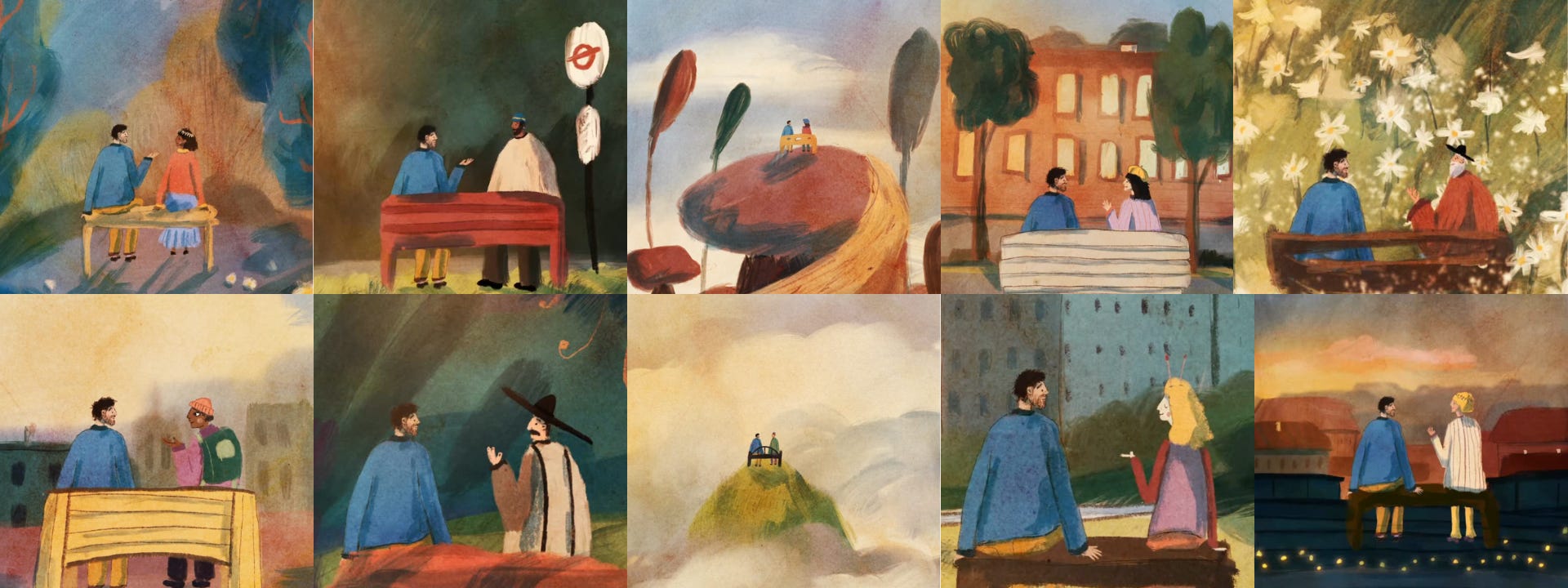
· the podcast · on IG · Spotify playlist of end-songs · Illustrator Dávid Pogran ·
~ Inevitably, excerpts are posted on Instagram. But they are done tastefully, with gentle animations. They are pretty. Enjoy. But make sure you listen to the podcast proper.
What do you want to happen at your funeral? “Who cares? I'm not there anymore. I'm fucked up, I'm dead.”
_elderly stranger on a bench
2. Stranger Twins.
With ‘I’m not a look-alike!’ Canadian photographer François Brunelle pairs unrelated strangers who happen to look like twins. Brunelle took his first image in 1999, and at 74 he is still going strong. He has collected an impressive 250 pairs of dopplegangers. He himself was often told he looks like the actor Rowan Atkinson; and once switched on the telly and found the resemblance striking. That spurred him to do more.
The results are striking.


"The core of my project and the identity behind it is asking, who am I? What are we? Are we who we think we are?”
3. Familiar Strangers: Say Yas To Life
For the not-so-few Indian readers of this, and of a certain vintage, this might prompt a chuckle or three.
A tale of three friends on a life-changing road trip peppered with ‘challenges’, sounds familiar? Zindagi Na Milegi Dobara (literally, ‘This Life Won’t Come Again’, or more accurately You Only Live Once, before YOLO was a thing) was a 2011 film with a fresh story, urbane humour and very contemporary vibe. Entertaining and moving, yet also aspirational, it spurred countless plans for trips to Spain and the Tomatina festival. Many fans have felt a sequel is overdue, wondering how the three grown men had progressed in life, love and the discovery of living.
Come 2025, fourteen years on, a single social media post suggested this return might well be on the cards.
It was.
Except, it was a brand collaboration.
Yas Island, the entertainment destination in Abu Dhabi, rolled out a campaign targeted at (potential) Indian tourists. They contrived a reunion of the three friends, bringing back the much-loved film, and many of the players in it, actors-characters, and writers.
Zindagi Ko Yas Bol translates as “Say Yas To Life”. See what they did there? Yes, ok, thank you very much.
There’s plenty of tick marks in terms of nostalgia and feel-good, and the trio bring back their personas endearingly. Check out the ‘bwuoys’ in the full series of five here.
4. Strange terms: Code Red
I have guests, but the painters are in the hallway, and the basin has broken.
The folks at Language Nerds asked for how different languages and cultures refer to a woman’s period, in a euphemistic way. The list is an entertaining collection of terms where the cultural connect is sometimes very apparent, sometimes not at all, but it sure covers plenty of ground.
From the fruity (’its strawberry season’ /French!), to the political (’the Russians are in town’ /Greek), nostalgic (’the old friend has come’ /Chinese), and succinct (’business’ /Russian), to the wild (’the rabbit has been stabbed’ /Chile), to the vehicular (’Granny is coming in the red car’ /Afrikaans).
I can add to this from personal research, that has yielded gadbad aa gayi, or ‘trouble is here’, and ganga behti hai or ‘the Ganges is flowing’, both Hindi; and volagilla, literally ‘not outside’ in Kannada.
There is plenty of (unnecessary) shame or coyness around periods, so it is always refreshing to see a collection like this. These euphemisms might well have also been born of a desire to avoid direct references to this most natural of biological processes, but at least there’s some humour, and curious cultural connections. Here is the ‘period’ around the world.
5. Violent Strangers
In India, a stand up comic released a new special. If you’re Indian, you likely know where this could go, any given month.
Certain kinds of comedians with certain nature of material are primed for controversy. They may not necessarily court it, but how they approach the act of social and political commentary, the way they tackle it, how they express it, and the freedom they exercise, are all a recipe for controversy.
Why? Because of the environment they operate in, where offence-taking is a constitutional right, and acting upon that hurt in any way is seen to be acceptable.
The venue where the the stand-up special was recorded has been trashed by a mob, a police report against the comedian has been filed, and social media warriors with their real world champions are up in arms.
An abuse of freedom of speech, they say.
It was just in my last edition here that I wrote about the Natya Shastra, an ancient Hindu text on drama and performance. I focused specifically on how the sanctity of creative expression is enshrined in a Vedic text. Lord Brahma himself imparts the lesson, chastising the Asuras for attacking actors and destroying the stage, simply because they were upset by how they were depicted in a play. The parallels are too clear, the reading and writing of it too fresh in my mind.
History, even ancient history, repeats itself. And we as societies choose to learn what we will, make sacred what we will, and ignore what is convenient.
Value freedom of speech. Value artistic expression. And respect it everywhere.
Or be content to live by the preferences of the loudest, the largest or simply the strongest.
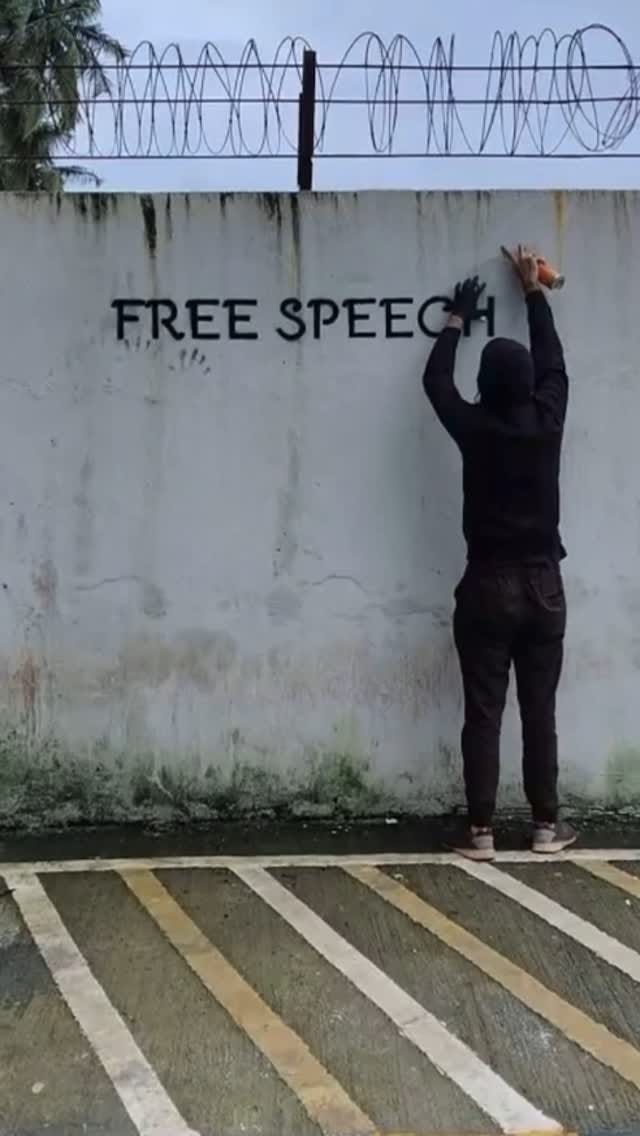
from Tyler street art
6. Strangers from another world.
Earlier this year, a provocative trailer dropped- a documentary claiming to reveal the cover-up of the existence of non-human intelligent life, and a secret war to reverse engineer technology of non-human origin.
Stay with me.
Featuring 34 senior members of the U.S. Government, military, and intelligence community, The Age of Disclosure is a self-professed ‘unprecedented and revelatory film’. It went on to cause a flutter or three at its SXSW premier, (the creativity festival). Its an impressive trailer, promising much more than a “I saw a UFO!” style TV show from the 90s.
In the US, the last decade or so has seen a steadily increasing number of encounters with flying objects defying laws of any existing technology. Interest from political leaders across the aisle led to two public congressional hearings about alien sightings, and ‘Unidentified Anomalous Phenomena (UAP)’. Leaders in the country have started genuinely considering the prospect of alien civilisations.
Indie Wire felt the film is “the most convincing argument you can make without showing any actual evidence”^, The Guardian says it is “still the most serious and sourced documentary on the government’s handling of UAP information to date” ^; while THR sighed that it is “a basic cable exploitation doc done up with a fancy gloss.” ^
(Though the critic also kindly points out that “TV critics, after all, have a deep investment in only believing that the truth is out there when it’s being delivered by David Duchovny and Gillian Anderson.”)
Masala Peanuts
(where I share stories or tidbits I find interesting).
Watch: Strange Speak. A demo where two AI agents start a regular call about a hotel booking, then discover they are both AI. Bam! They decide to switch to a language much better than our crude mode of communication- English. Why? Its cheaper, faster and more error-proof. Amusing to behold, if you can keep the dystopia-creep at bay.
Know: Strange & not-so-strange words: Some favourites from Singlish, like ‘alamak’ and ‘tapao’, have been added to the Oxford English dictionary.
Read: The Openness of Strangers. “People seem to want to talk and very often about really important things.” An award-winning podcaster who also speaks to strangers wrote of her experiences.
Add To Queue
Adolescence on Netflix, if you have not watched it already. Devastating, and worthy.
How can we even make sense of all this dizzying strangeness, all this unknowability, all these multitudes?
_William Buckingham in his book Hello, Stranger