

So White, So Colour
The Wimbledon code, handmade colour, the Walkman.
Greetings, welcome to another of my collection of curiosities. Thanks for having me and my brew in your inbox. As you might notice, you now have the option to listen to this post, just click on the link to listen to my dulcet tones.
This week, The Championships began at Wimbledon. I write today as much about the sport as journeys in tradition. From the pristine monotones of SW19, we dive into vivid, joyous mashes of colour from Europe and India. There is also some Sony nostalgia, a game to steal what is stolen, a Reservoir Dogs farewell and etiquette coaches.
Show White: The colour of Wimbledon.
A cop & his mother: A boy’s maximalist photos.
Friday Find: Names will be made, in clay.
Soundabout: a music player from 46 years ago
With: Office etiquette, a ‘re-looting’ game, Michael Madsen.

1. Show White
Almost, almost entirely, predominantly.
Wimbledon is underway this week- the oldest Grand Slam in tennis, the oldest tournament in the sport, and widely considered the most prestigious. More than most sporting events, Wimbledon has iconic imagery and associations going back decades. (I ought to be calling it ‘The Championships’ but hey, I’ll live on the edge.)
The green grass courts, the original playing surface for ‘lawn tennis’. Etiquette, courtesy.. and curtsies. ‘Gentlemen’ and ‘Ladies’ events, not ‘Mens’ & ‘Womens’. Strawberries and cream. Royal patronage. A fabled history.
But in this little ocean of tradition, none is more iconic than the dress code.
White.
“White does not include off white or cream.”
This, from the official guidelines, echoes how this sartorial restriction is no mere suggestion.
As with so much, this goes back to that most free, liberated and uninhibited of times- the Victorian era. Sweat, you see, was viewed with much disdain. Unseemly, unsightly, unclassy. (That should be a word).
Tennis, on the other hand, was the opposite of all those. A game for the elites, played on manicured grass surfaces, with genteel gents and dignified ladies. In fact, tennis was one of the early sports to include ‘the fairer sex’. The sport was a social affair, and this led to a careful awareness of how one looked. In such settings, you surely can understand, unsightly perspiration rings really held no place. White had a better chance of hiding them, and was also a classier option. The working class didn’t wear much white (wouldn’t have gone so well with all that muck and hard manual labour, I suppose).
Of course, white has been associated with tennis in general, not just Wimbledon. This is still true in many ways. (Case in point my attraction to white shorts and shoes for the offspring’s tennis sessions.)
Rules
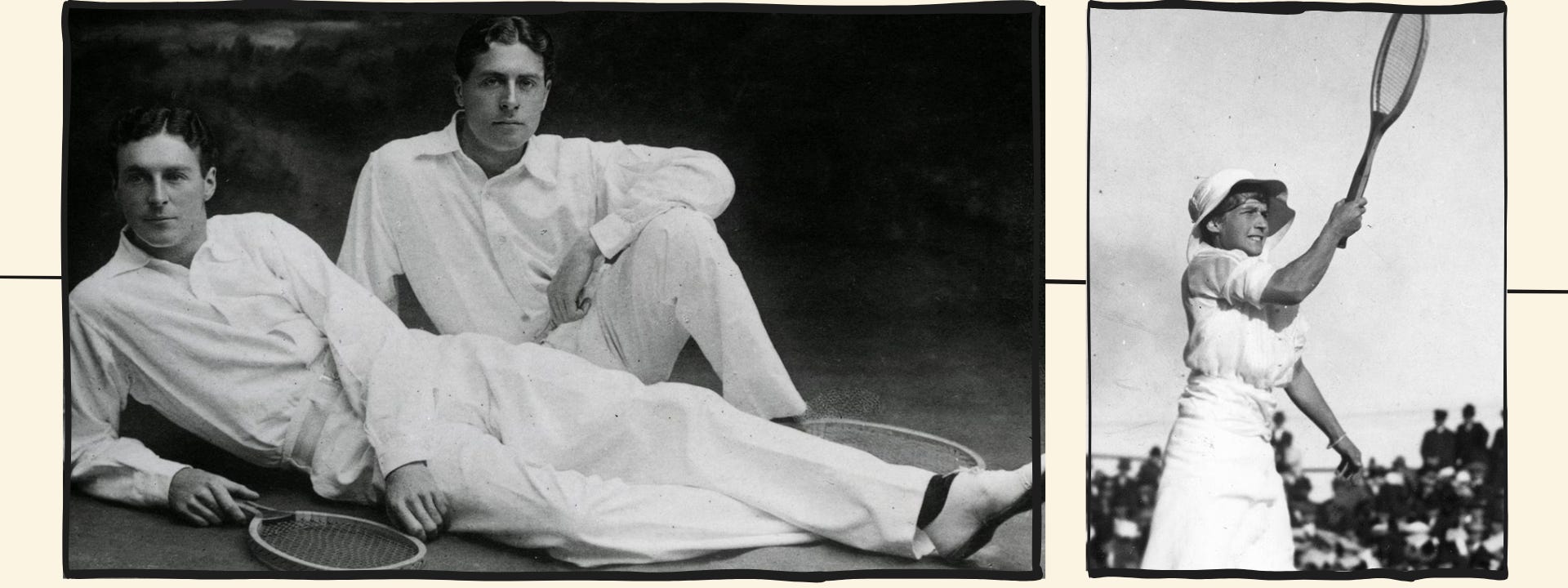
When the All England Tennis Club’s Championships began in 1877, white was clearly the choice- at the time, in long dresses, long sleeved shirts and trousers. When the Club first opened, the only dress code was, “Gentlemen are requested not to play in their shirtsleeves when ladies are present.”
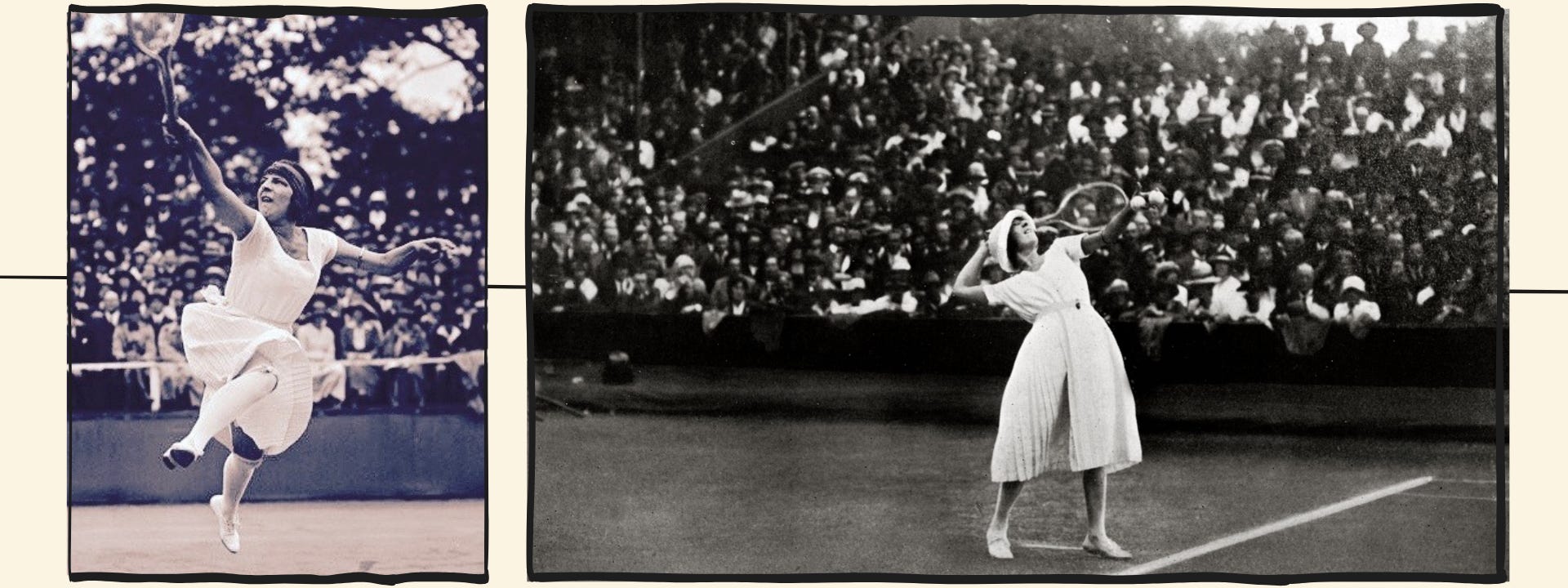
Styles changed as the years went by, but none more notably so than what Suzanne Lenglen ushered in. The Frenchwoman’s flamboyance, both on and off court, coupled with her desire to bring fashion (and comfort) into the women’s game, made her a star in the 1920s. (I can unreliably confirm she partook in sips of cognac between games!).
Her appearance at Wimbledon is sometimes heralded as a change of guard, “Unlike her counterparts, Lenglen dared to expose skin, opting for style and function. She arrived ‘scandalously’ bearing her legs in a white calf-length pleated skirt, thanks to French couturier Jean Patou.” Her “indecent” attire was a low-neck dress with short sleeves, a calf-length pleated skirt, silk stockings rolled down to just above the knees, and a floppy hat. She didn’t wear a corset. She didn’t even wear a petticoat. The horror!
Scandal or not, La Divine (The Goddess) won six Wimbledon titles.
Back to The Championships- requirements for whites were not actually included in the official rules at Wimbledon till 1962, by when some stray colours had shown an annoying penchant for appearing on polo tees. By 1995, ‘predominantly white’ was changed to a more strict ‘almost entirely white’, and expanded to include accessories in 2014. Fortunately, though belatedly, in 2022, the decision was made to allow coloured undershorts for women who preferred it during their periods.
“To us, the all-white rule isn’t about fashion, it’s about letting the players and the tennis stand out. Everyone who steps on a Wimbledon court, from a reigning champion through to qualifier does so wearing white. That’s a great leveller. If a player wants to get noticed, they must do so through their play. That’s a tradition we’re proud of.”
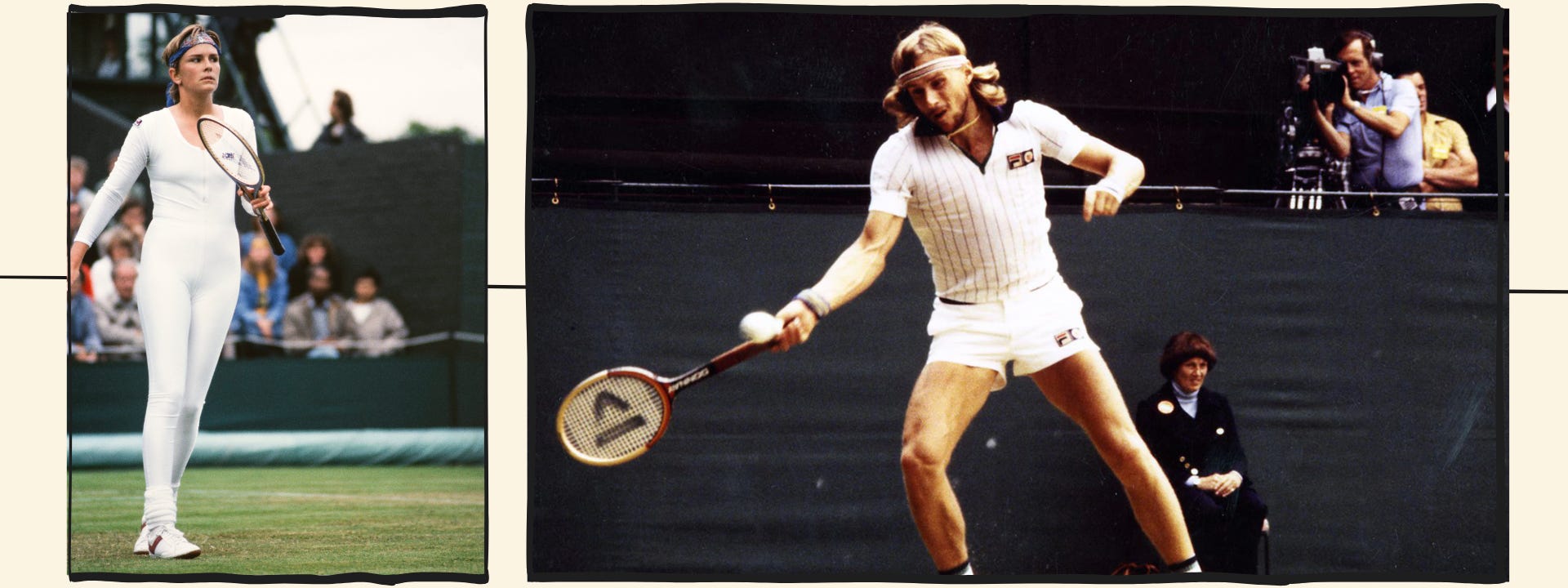
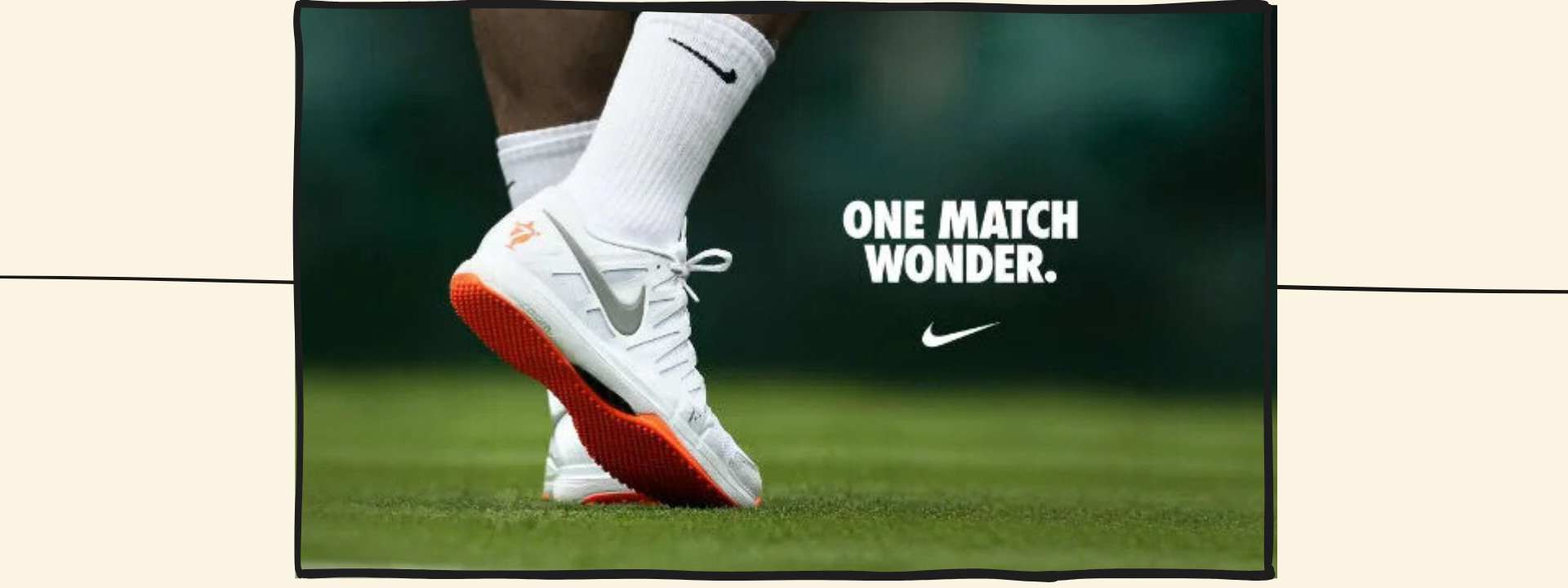
Through these years, Bjorn Borg had brought his disco aesthetic in stripes that would have barely got him through the door in 2025; Andre Agassi famously skipped Wimbledon for three years because “image was everything”, before returning with whites and respect in tow, to win it; Venus Williams had pink bra straps questioned; even resident royalty Federer was pulled up for orange soles (he switched them out for the next game, and Nike cleverly used it); yet all the while the restrictions, as restrictions often do, have led to creativity and style across fashion and accessories.


Beyond all these, consider their commercial approach. Minimal presence of sponsors on court and famously deep relationships with partners; their partnership with Slazenger goes back to 1902, the longest sporting goods partnership ever.
These are all symbolic of a certain approach to the game. As a fan, the AELTC’s devotion to their own particular ethos, is fascinating. Some feel it is tradition for tradition’s sake. I believe it enriches the game for the fan, makes for a purer experience. I see it as a commitment to maintaining a way of tennis they hold dear; one that sets them apart in a way that is both distinct and beloved, even hallowed.
Thanks to the cathedral we call Wimbledon, tennis has remained holy in the hearts of the tennis devout. Forever faithful to its original mandates, the All England Tennis Club has safeguarded the sports’ tradition, and by doing so, kept the classic appeal of tennis whites in vogue.
Addendum.
For all that, this year marks a significant departure from “just how things are” at The Championships. After 148 years, this is the first time the tournament is using automated line calling. That’s right, this means no line judges standing behind the players with hands on knees, slightly bent, razor sharp eyes, dressed nattily in Ralph Lauren uniforms, shouting “fault!”. The men’s and women’s tennis tours have already adopted the system, as have the Australian and US Opens, so it was only a matter of time. This is a nice piece on it with the view of a former Wimbledon line judge and others.
“You have to be a bit of a saint to want to spend your weekends umpiring children’s tennis matches at the local club without the carrot of Wimbledon at the end of it,” she says. “Why would a 15-year-old who’s a club tennis player or a county tennis player want to go into line judging when there’s nothing really in it for them?”
More: Wimbledon’s first fashion scandal · Why white · Here to stay ·

2. A Cop & His Mother
It seems common- and normal- that many conversations around creativity and expression these days are surrounded in fact by conversations around efficiency, ease and speed. We forget that many of those who create, do so to express. Not to be efficient.
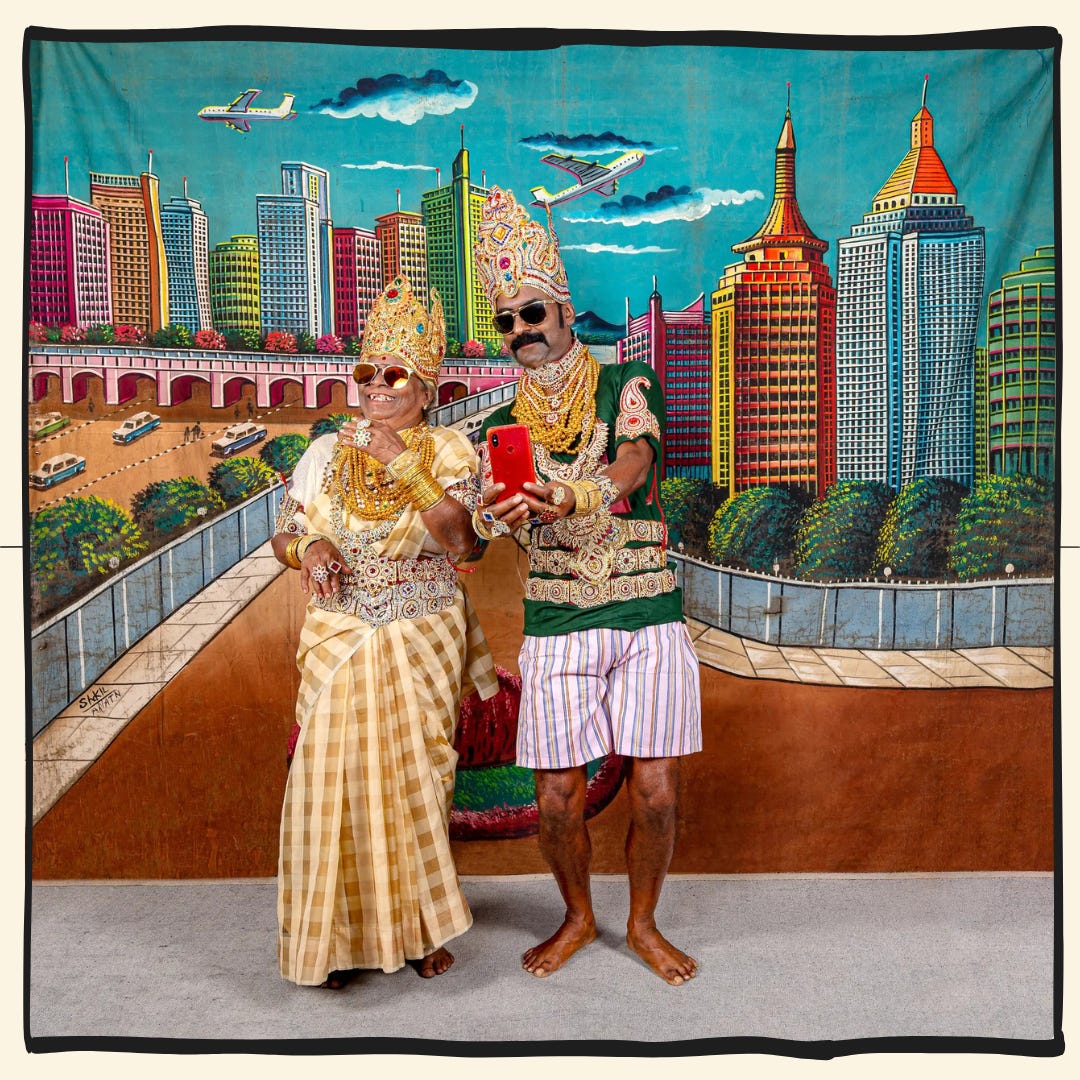
B S Shivaraju grew up without a family photo album. Born in Ramanagara in the southern Indian state of Karnataka- the village whose claim to fame is being where the legendary film Sholay was shot- he harboured a desire for photos with his mother. A desire that went unfulfilled in his youth, including a disappointing visit to a local studio where, all set for the photo, they were told they couldn’t afford it.
Growing up, he saw his grandfather perform in the local theatre. Any artistic inclinations, though, were left by the wayside; practicality led to him becoming a policeman at the age of 21. After 18 years in the khaki uniform, though, Shivaraju became ‘Cop Shiva’. He left the force to become a photographer. A recent exhibition brought his childhood desire to life in delightful ways.
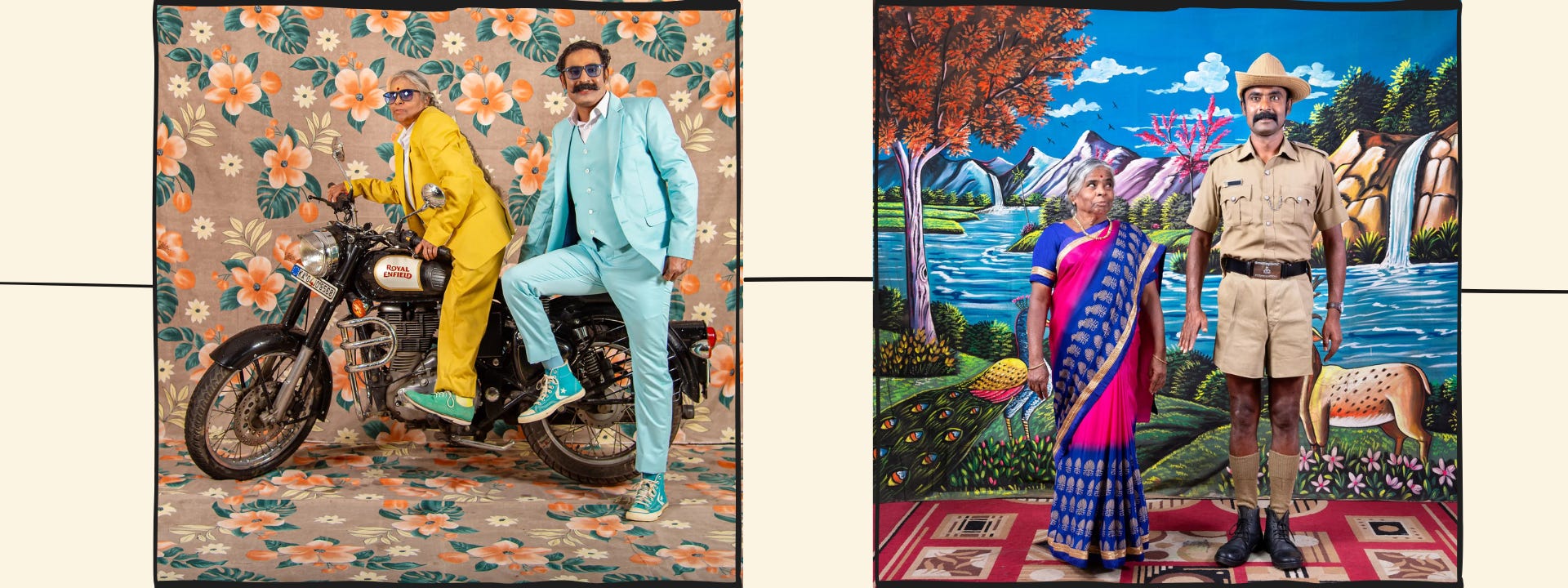
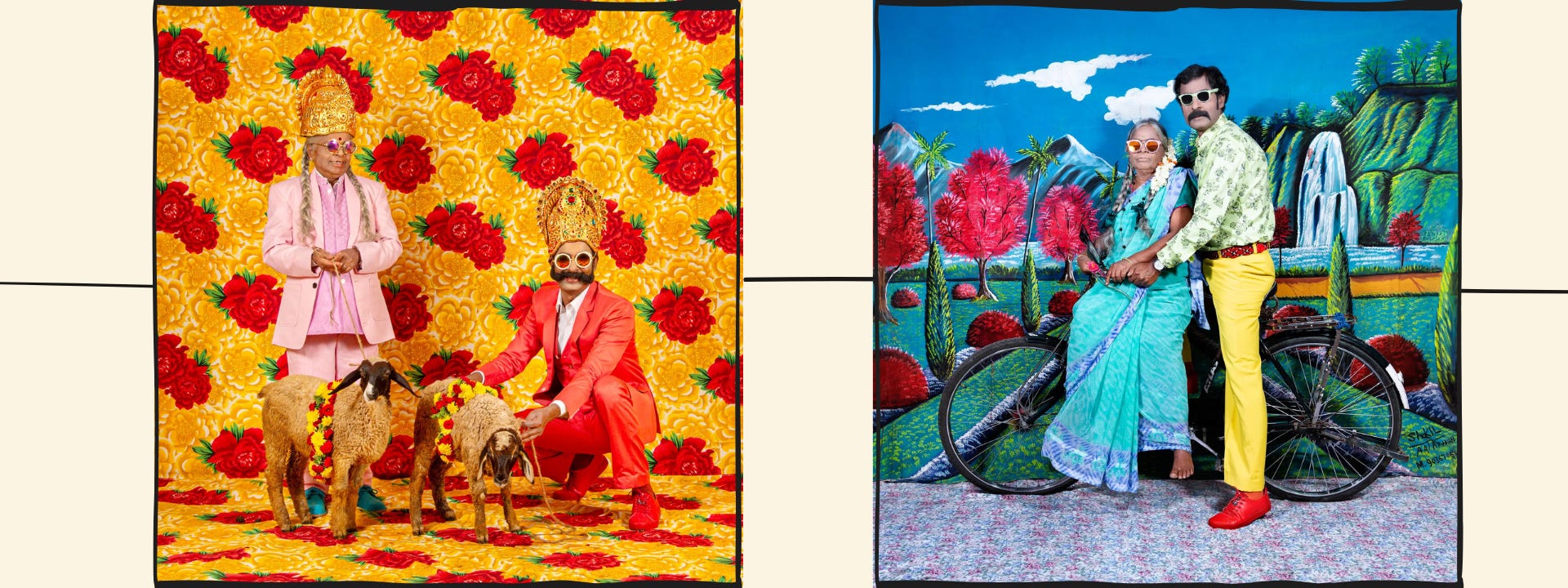
The maximalist India aesthetic, the dialled-up old school studio feel, the home made props and costumes… these are great. But most of all, there is a youthful joy in them- from both mother & son- that charm the most.
Cop turned artist, on Vogue India.

3. Friday Find: Names Will Be Made
More real creativity you can (almost) reach out and touch. This trailer for the BBC uses claymation made “the old fashioned way” (i.e with humans). Action-packed, vibrant, effervescent- here is a spot you can feel people have really ‘hand-crafted, with love’- there is no other way such gorgeousness happens.
Made entirely from clay, Directed by Nicos Livesey with Blinkink · (the team behind the brilliant Britbox commercial some time ago). For BBC Creative.
A glimpse at how painstaking this can be, true labours of love.


Some Behind the Scenes here and here ·

4. Soundabout
Picture this.
It is a rare quiet evening at home. You switch on some music. Maybe cook a slow meal. Read a book. Clean the cupboard. Or just sit by the window and listen to the music as the night draws in. The music envelops you, embracing you in its is beats or warmth or calm or chaos.
Then, you suddenly realise you are out of pepper. That aglio olio is not going to be right without it. You grab a hat, rush to the store down the street. But the spell is broken. The beats are busted. The folk has faded. The symphony is silenced.
What if it did not have to? What if you could carry your stereo with you? A small, portable device that can play your cassette tape music as you walk to get that all important pepper?
I’m imagining what a pitch for the Walkman could have been like. Because Sony released that ground-breaking device this week, on July 1st, back in 1979. Apparently, the term ‘Walkman’ was Jangish or Japanese english; so it was launched as the ‘Soundabout in the US, ‘Stowaway’ in the UK, and ‘Disco Jogger’ was also seriously considered; but eventually- fortunately- Walkman caught on everywhere. By 1986, the word was in the Oxford English dictionary. A couple of decades or more after that launch, your writer was lucky enough to own one, though one of my abiding memories is of my walkman falling off my motorbike. Yeah, don’t ask.
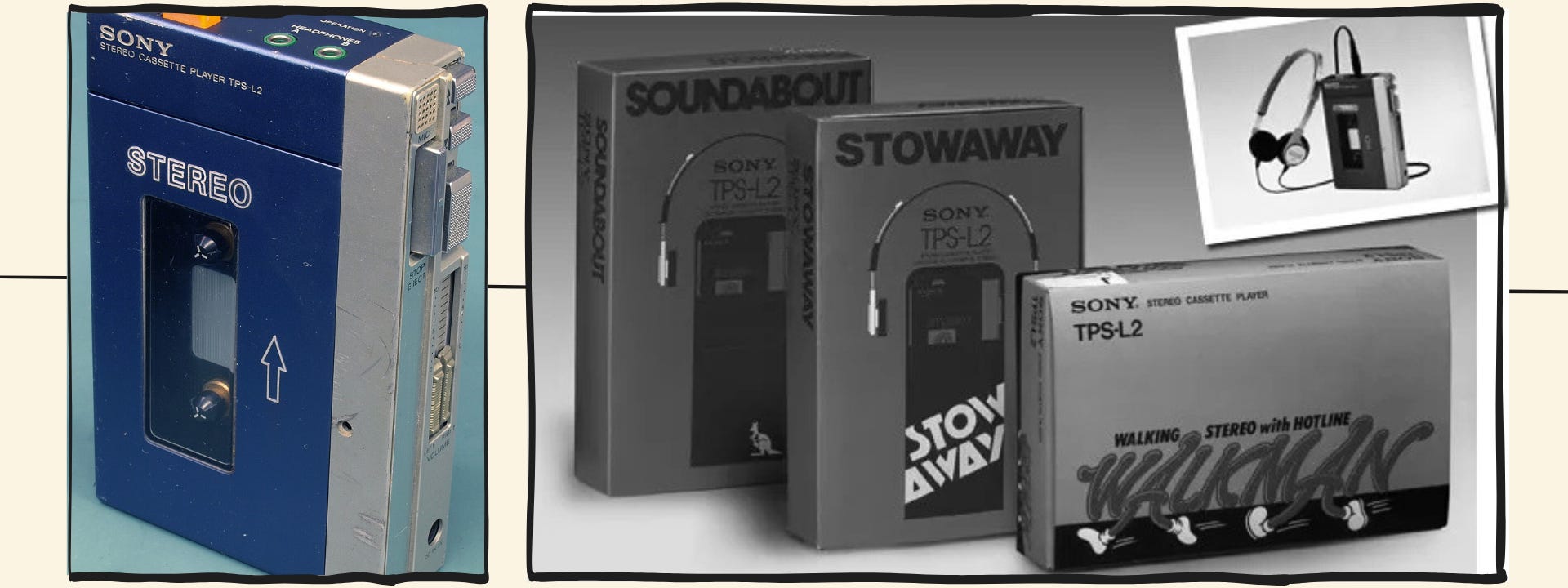
Not long after, the MP3 came along, and reshaped everything. But for many, the Walkman holds fond connections.
I even did a, erm, video on this.

Masala Peanuts
(where I share stories or tidbits I find interesting).
“Is is stealing to take back what was stolen?” ‘Relooted’ is a new game unveiled by South African video game studio Nyamakop. a side-scrolling puzzle platformer that allows you to repatriate African artifacts by looting western museums.
“Their manager didn’t know how to handle it as they didn’t want to sound like a parent.” US firms are hiring etiquette coaches for Gen Z employees who are dressing inappropriately, treating the office like their bedroom, leaving food wrappers in communal eating spaces and ghosting their supervisors.
“He was thunder and velvet. Mischief wrapped in tenderness. A poet disguised as an outlaw.” Actor Michale Madsen has died aged 67. He was part of numerous Tarantino films, maybe most notably Reservoir Dogs as Mr Blonde.
Add To Queue
-watchlist, playlist, readlist - :: stuff on my radar
‘Stuck in the Middle With You’, specifically from this scene in Reservoir Dogs.
“I have a hundred things to do. I have to document so much. Everything is vanishing and changing, and I’m just hungry to do more. Can I catch it before it goes?”
_Cop Shiva