

Diamonds & Dust
Hearing a stray comment, being oblivious to Hollywood history, clued out from recent outrage. These came together to push me into a swirl of eras, cultures and aesthetics. I found myself with stories within stories, on paths in history, some important, some stray; straddling stature and frivolity, glamour and grace, meaning and imagination.
And so did I craft this narrative, one where I met four women, separated by four centuries and varying relevance, threaded together by one shiny object.

Four women, four centuries, one trinket.
Fate.
The year is 1577. Isfahan, modern-day Iran.
Persian nobleman Mirza Ghiyas Beg and his wife Asmat Begum have fallen upon hard times. They decide to make their way to that great empire of the age, Mughal India- but misfortune follows. Beg, his pregnant wife and their three children are robbed during the journey. Yet, with fortitude and luck they make their way to Kandahar, modern-day Afghanistan. Here, Asmat Begum gives birth to a second daughter. Not long after, Ghiyas Beg finds himself in the service of Emperor Akbar. The family believes better times are heralded by their fourth child, naming her Mehr-un-Nissa, ‘sun among women’.
Ghiyas Beg’s fortunes will indeed turn, but even he cannot imagine the trajectory that young Mehr-un-Nissa is on.
Years go by. Ghiyas Beg provides his beloved daughter- later described as one with “piercing intelligence”- with the finest education. By 1607 though, she is already a widow, her warrior husband Sher Afghan meeting the kind of death warriors sign up for. Mehr-un-Nissa’s fate, though, is still to be fully revealed.
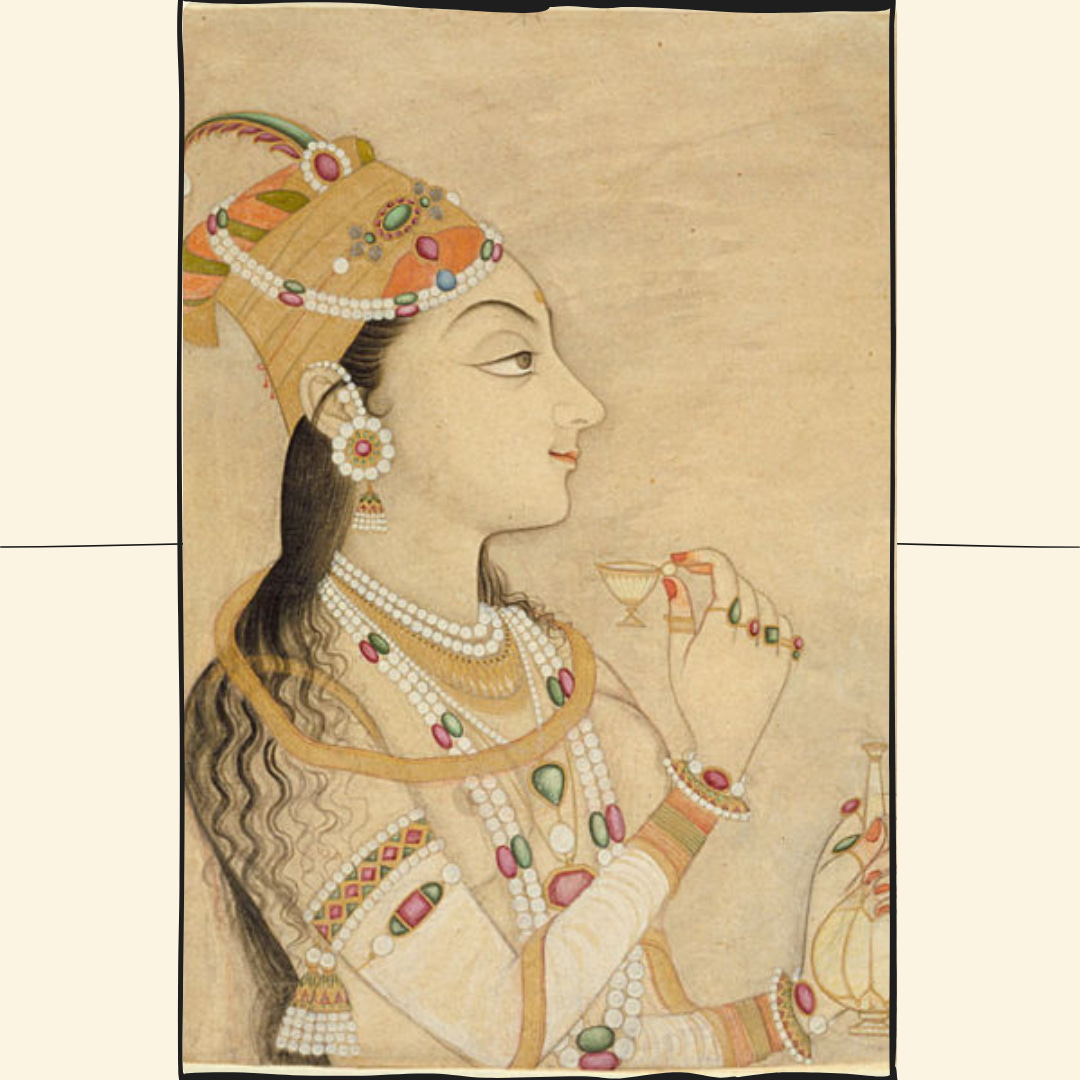
Fate had decreed that she should be the Queen of the World and the Princess of the Time. _Iqbal Nama-i-Jahangiri of Mutamad Khan
1611.
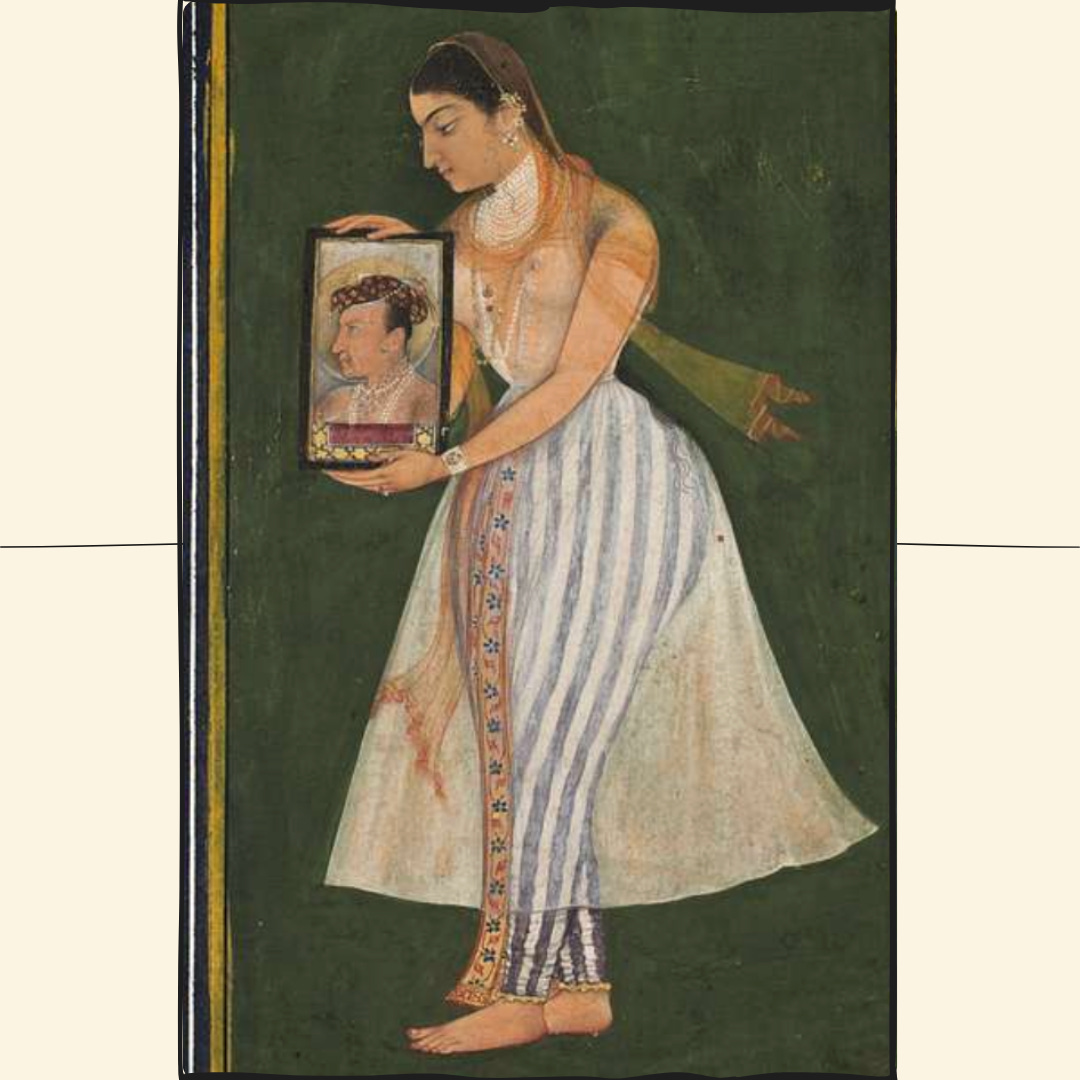
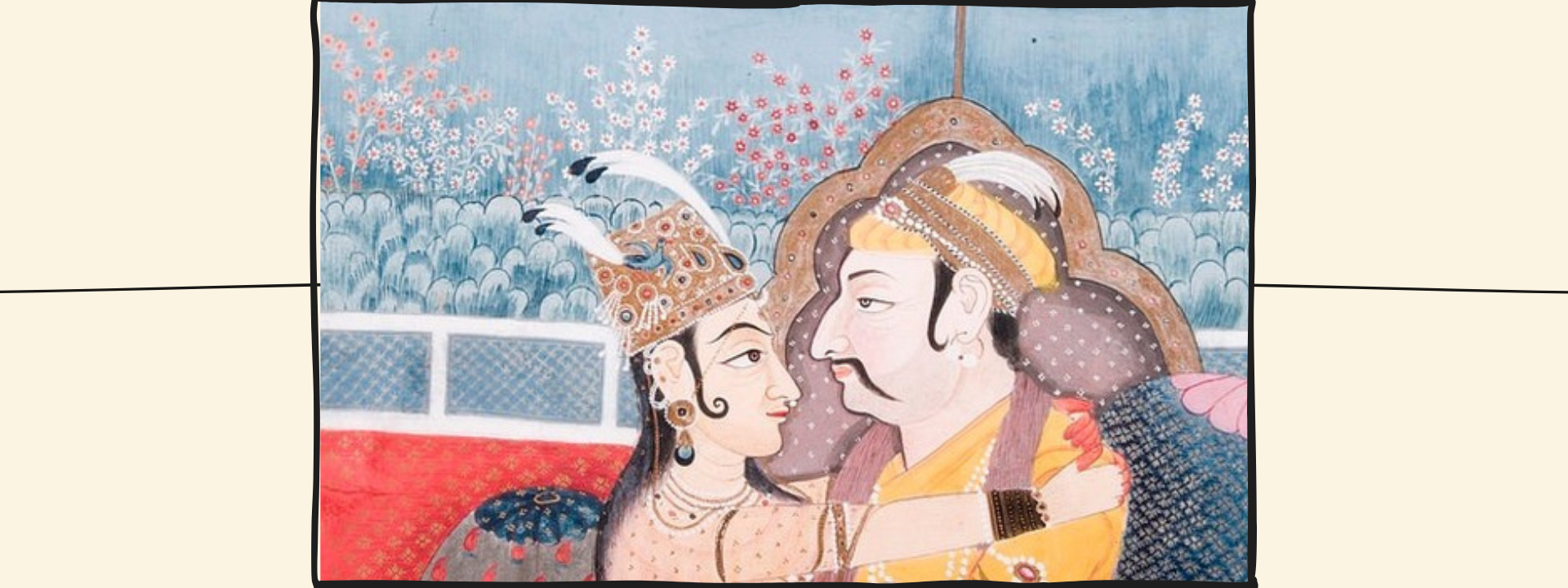
Mehr-un-Nissa has been, for four years now, lady-in-waiting to Ruqaiya Sultan Begum, one of the chief wives of the late Emperor Akbar. His son, the new Emperor Jahangir will duly fall in love, and make Mehr-un-Nissa his twelfth and final wife. He bestows on her the title of Nur Mahal, ‘Light of the Palace’.
Jahangir rules an already great empire, and his reign will be known for both cultural enrichment and political intrigue. He steadily loses interest in administration, leaning instead to wine and opium. Through these years, the love for his twelfth wife grows into a relationship of great trust. Great enough to give her the highest symbol of power- the imperial seal.
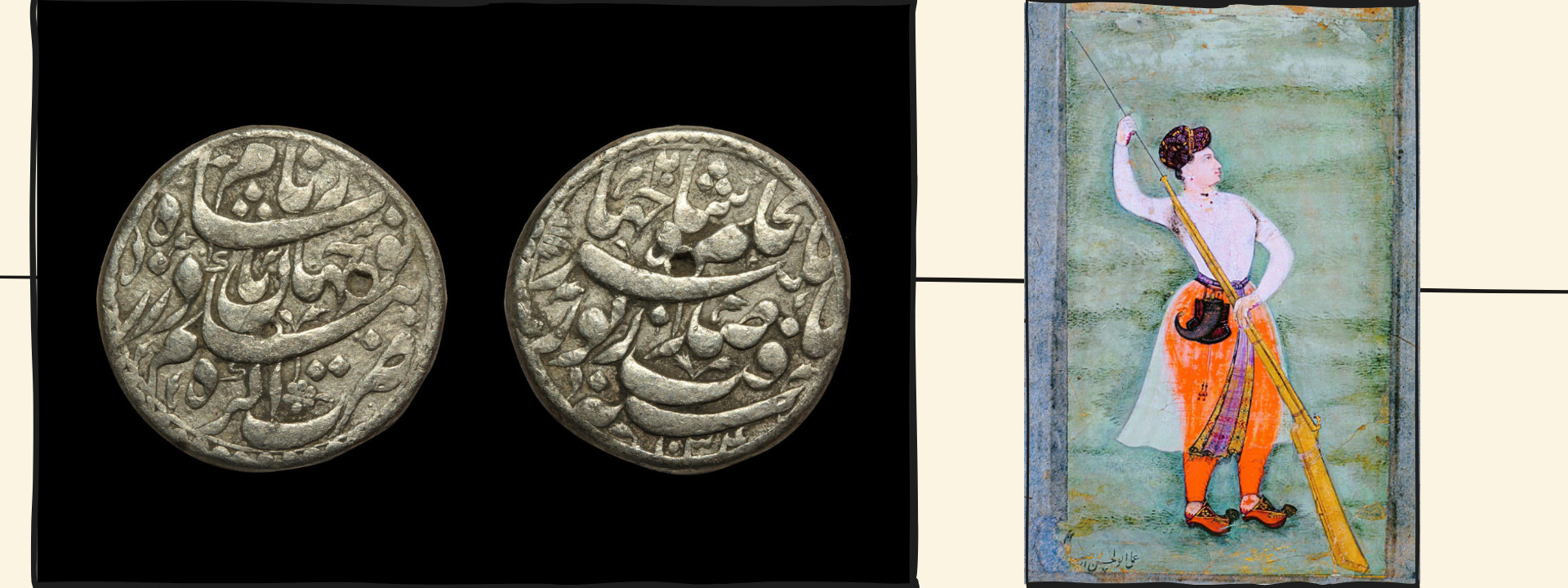
Mehr-un-Nissa proves to be a formidable woman. She is a fine conversationalist, a crackshot hunter, a secret poet. She pursues the arts, is a patron of architecture, a lover of gardens. By the 1620s, as Jahangir slowly sinks into alcohol and inefficacy, she rises in influence. Now come to the fore her administrative skills, political acumen, even military nous. ‘Farmans’ or edicts are issued in her name, and she is the only Mughal woman in whose name coins were struck. Effectively the co-sovereign, Mehr-un-Nissa is truly the ‘Padhsah Begum’, the Empress, ruling in all but name. Jahangir has, by now, bestowed on her the name she will always be known by.
Nur Jahan. Light of the World.
Flair.
The year is 1932.
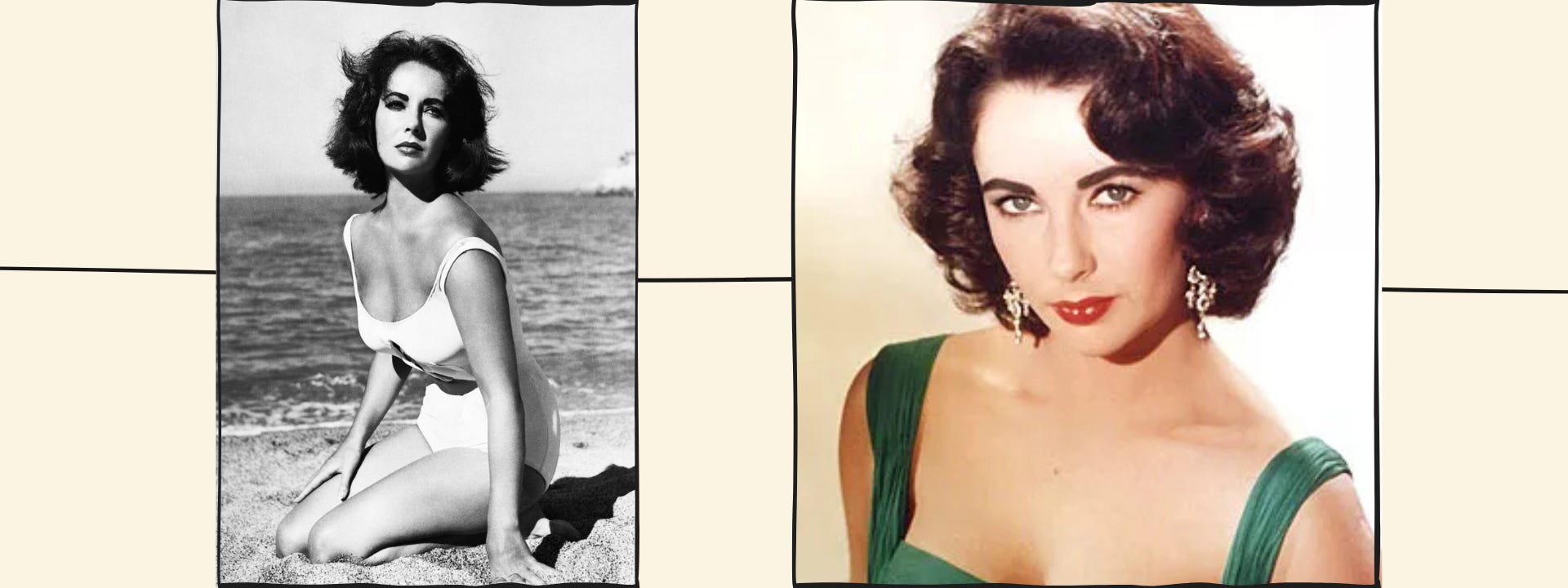
Elizabeth Rosemond Taylor is born to American parents who moved to London three years ago. The family lives a prominent life, running an art gallery and hobnobbing with artists, politicians and diplomats. Elizabeth goes to a Montessori school, raised under the teachings of Christian Science.
Being a performer was always on the cards- at the age of 3, Elizabeth starts dancing, even giving a recital for British royalty Princesses Elizabeth and Margaret. Then, as with much of Europe, the horizon darkens. In 1939, the family must leave this country on the brink of war.
They relocate to California. Not long after, a family friend encourages the young girl to take a screen test; with her poise and striking violet eyes, she soon becomes a child star. But, unlike many others, she is able to make the transition to adult acting. By the 1950s and 60s, she is one of the most successful (and highly paid) actors of her time. She wins much acclaim (and two Academy Awards), often for playing sensual, volatile women (a glamorous, lavish version of Cleopatra, for instance).
Jahangir used to say that he had
‘handed her the country in return for a cup of wine and a few pieces of mutton’. *
Symbols.
It is 1627. Nur Jahan has kept the empire together, but cannot save her husband. Jahangir dies, and a long-bubbling war of succession ensues. Nur fails in her push for Jahangir’s youngest (and her son in law) to rule; another step son will eventually, brutally, become the emperor Shah Jahan. Nur will go quietly into retirement.
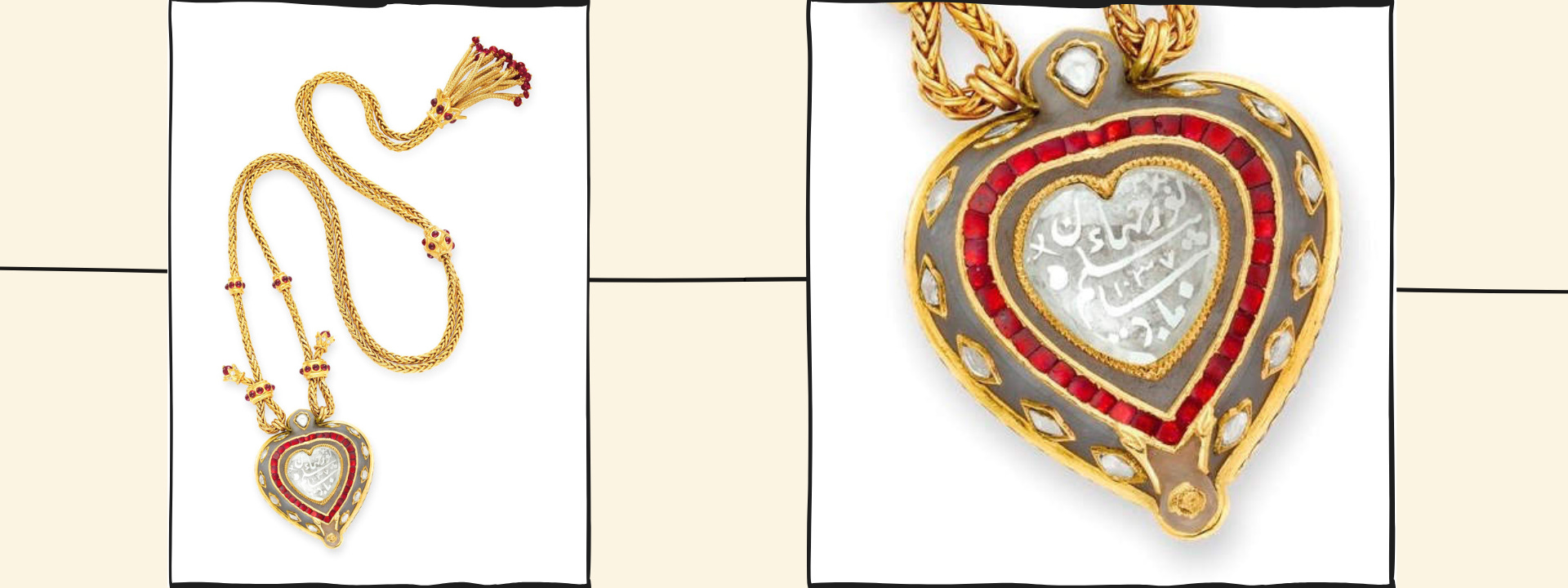
Also around this time, an exquisite gem is crafted– a heart-shaped, table-cut diamond. A pendant suspended by two silk chords tied around the neck, its flat surface inscribed with Persian nasta‘liq (a calligraphic hand):
Nur Jahan Begum Padshah, 23, 1037.
23 refers to Jahangir’s regnal year, and the Hijri date 1037 converts to our Gregorian 1627-28. In that final phase of his life, Jahangir had ordered this for his beloved; the inscription on a jewel of this caliber underscoring the Begum’s status- personal, political, royal.
Though it is a stunning symbol, this diamond pendant might well have twinkled quietly out of history, much like its owner lived out her last few decades. But, also like its owner, this gem continued to echo across the centuries, with its own story, as well as those foisted on it by influential voices.
The Western world is equally enraptured by Elizabeth Taylor’s life off camera, and definitely her love life. She has a persona that fuses lush glamour with an earthy directness. Many note that she swore freely, laughed loudly, and was disarmingly unpretentious about her beauty and fame. Her story is also inseparable from her eight marriages to seven men, engagements, affairs, scandals… hers is a personal life that fascinates and scandalizes in equal measure. Even the Vatican weighs in, condemning her relationship with actor Richard Burton as “erotic vagrancy.” Theirs is a passionate, tumultuous and very public relationship- married, divorced, married again, divorced again.
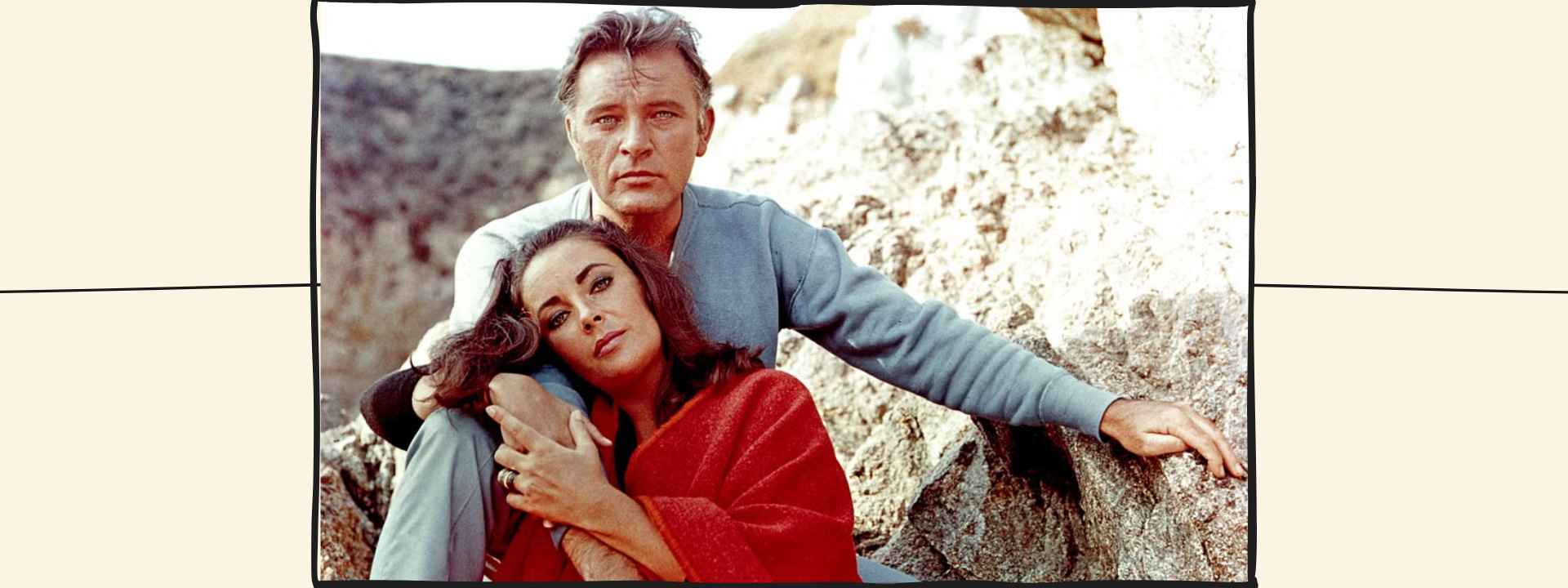
It is in this relationship that Taylor receives a gift which will capture the imagination of a sliver of modern humanity.
“I would have liked to buy her the Taj Mahal, but it would cost too much to transport.”
In 1972, Richard Burton spends a trifling 350,000 pounds to buy a diamond pendant from Cartier for his beloved wife’s 40th birthday. In setting the stone with cabochon rubies and old mine‑cut diamonds, Cartier hang it with a woven gold chain. This chain replaces the silk that it originally hung by, for this is indeed, the very diamond of the Begum Padshah, Nur Jahan.
Journeys.
The most recent player on this arc has but a bit part, but she is a catalyst. Margot Robbie, the glamorous Hollywood star, producer and bright-eyed beauty, plays Catherine in the latest, divisive film version of Emily Brontë’s Wuthering Heights. At a recent red carpet, she breathlessly spoke of wearing “a lot of romantic history” on her neck. Lent to her by Cartier, it was Elizabeth Taylor’s great ‘Taj Mahal diamond’.
Cue gasps of starry-eyed delight, fogs of romantic nostalgia… and outrage.
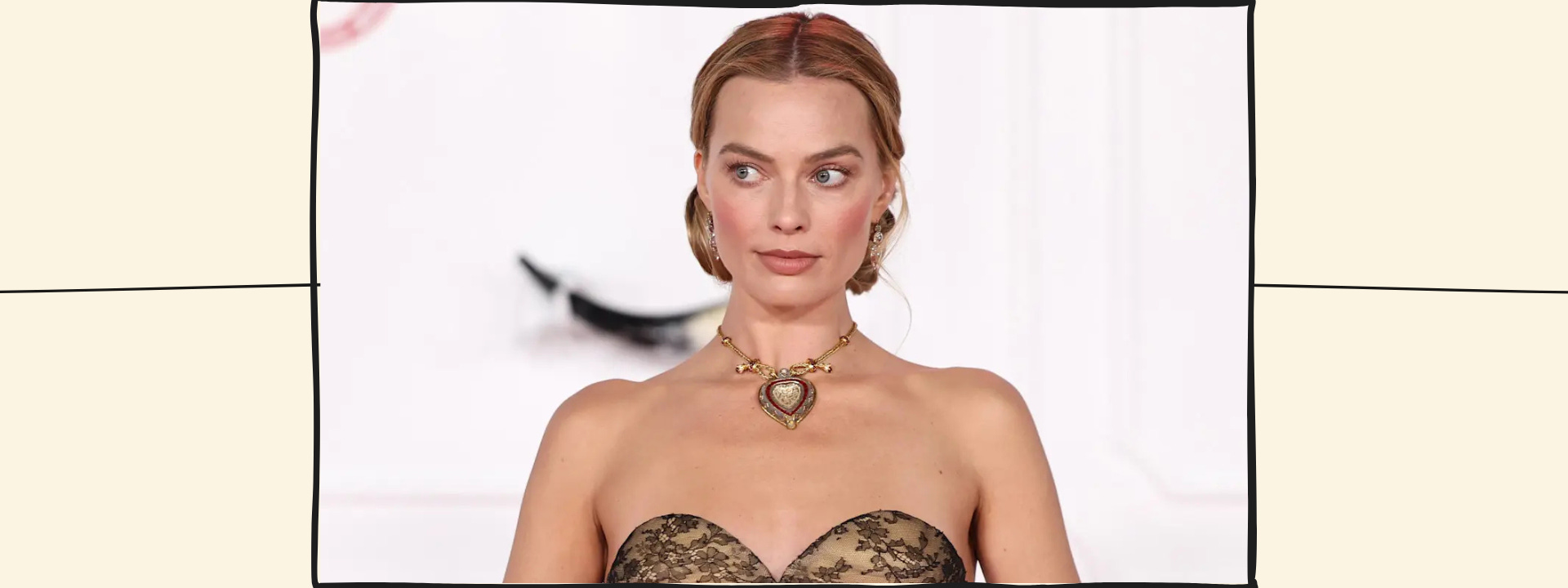
The journey of this four hundred year old gem finding its way onto a Hollywood red carpet in 2026?
We do not hear about the diamond in any records of Nur Jahan, or since. The stone is its own most clear record, telling us when and for whom it was crafted. It could well have been part of the Royal treasury for years to come, yet it will be centuries before we know of it in any real sense.
We know how Nur Jahan passed gently a few decades later, we know of Shah Jahan’s rule, his beloved wife, and we know of the great Taj Mahal. Of the diamond, we know little or nothing- much is informed guesswork, inference or speculation.
The sacking of Delhi in 1739 by Persian emperor Nadir Shah came as the light of the Mughal empire was fading. It was unfettered plunder, to the tune of 700 million rupees, including some of the most storied treasures- the great Peacock Throne, and the famed Koh-i-noor. It is plausible this incredible war booty could have included the Nur Jahan pendant, and been part of the later scattering of gems into European collections that followed Nadir Shah’s own death. But there is no evidence to support this.
The pendant could also- like some other jewels- have escaped Nadir Shah’s looting, staying in the Mughal treasury as the empire withered. It eventually could have been taken when Delhi was (again) sacked in late 1857, this time by the British, crushing the last remnants of Mughal rule.
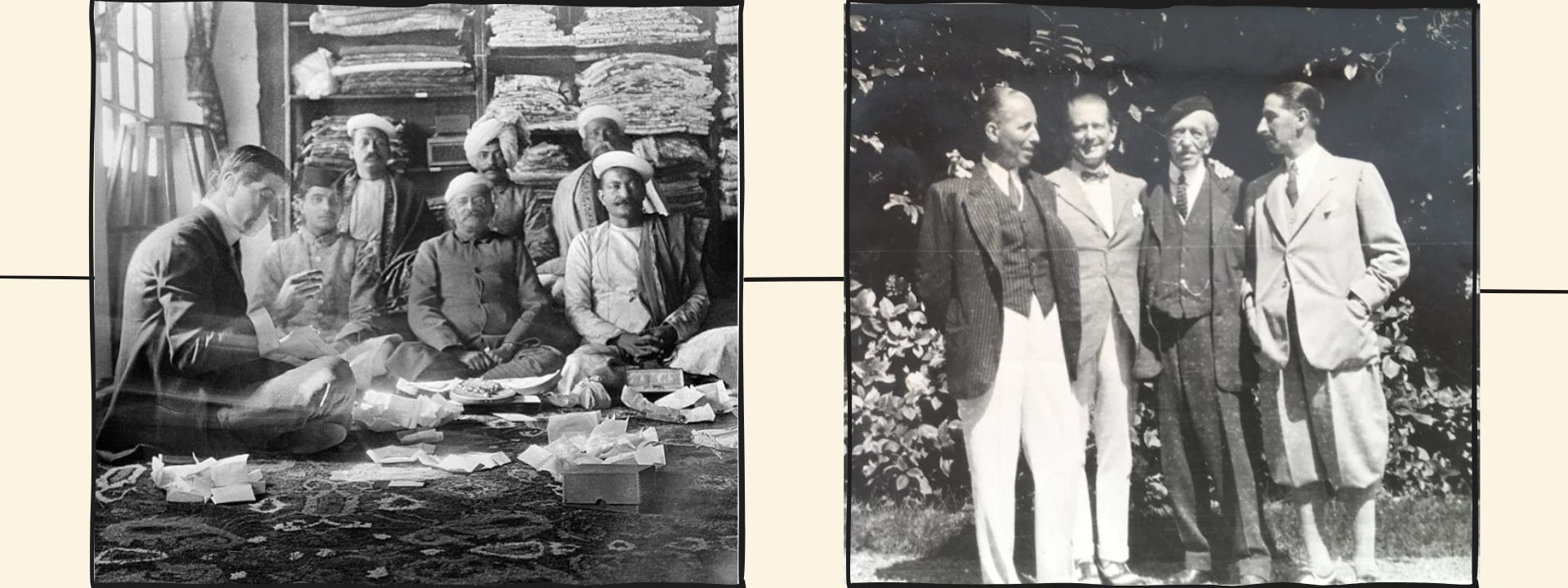
By the late 19th and early 20th centuries, French jewellers like Cartier were routinely acquiring carved Mughal stones and Indian diamonds from princely families and intermediaries, amid a broader trend of Indian gems being reset for both Indian maharajas and Western clients.
A significant portion of Indian royal jewelry left via more opaque routes of course, often under financial or political pressure, scattering into European dealer networks where provenance was rarely fully recorded. Traded, gifted, sneaked, stolen.
Stories.
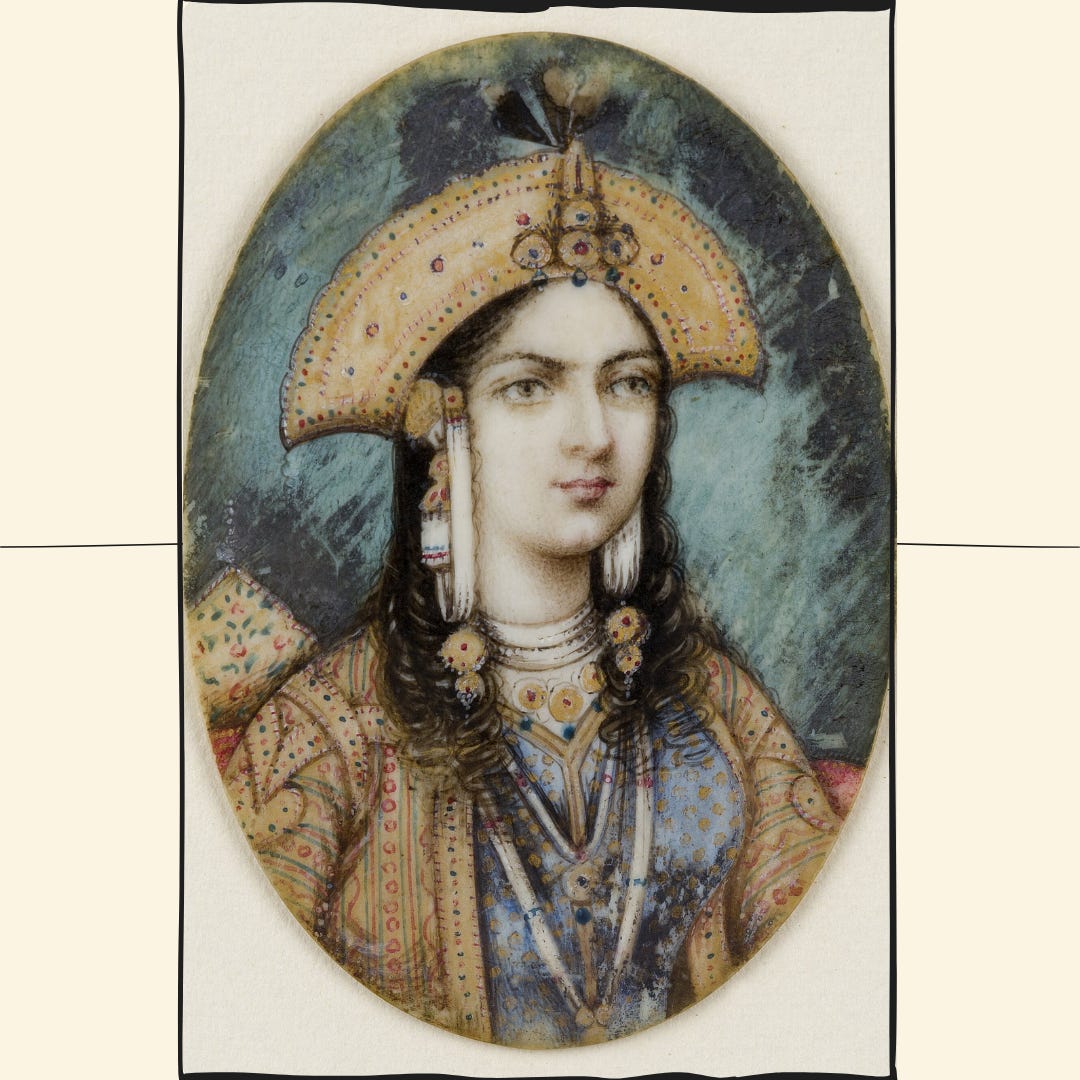
And so to the fourth lady in this four-century arc. Playing no known role, yet a meaningful part, is Mumtaz Mahal.
Born Arjumand Banu Begum in 1593, she is the fabled queen of Shah Jahan, the very one who inspired the Taj Mahal. Her father Asaf Khan, who happens to also be Nur Jahan’s brother, is the Grand Vizier to Emperor Jahangir; Mumtaz is Nur Jahan’s niece, and will go on to be her step-daughter in law.
In 1612, she marries Jahangir’s third son, the Prince Khurram. By the time he becomes the Emperor Shah Jahan in 1628, stories of their love are already legend. “His whole delight was centered on this illustrious lady,” it was said, “to such an extent that he did not feel towards the others [his other wives] one-thousandth part of the affection that he did for her.” *
But their reign together is short lived- Mumtaz dies in 1631, giving birth to their fourteenth child.
For Nur Jahan’s diamond, everything until the 20th‑century appearance with Cartier is an informed reconstruction rather than a documented trail. Having resurfaced, its identity shifts quite rapidly from an imperial Mughal object to a Western celebrity jewel.
Its ‘origin story’ is glibly, unsurprisingly, distilled into a symbol of love. We are told the diamond made its way to the passionate Shah Jahan, who gifted it to the great love of his life. Through this romantic, retrospective casting of Mumtaz Mahal, the woman who inspired one of the great wonders of the world, the gem is called the ‘Taj Mahal Diamond’.
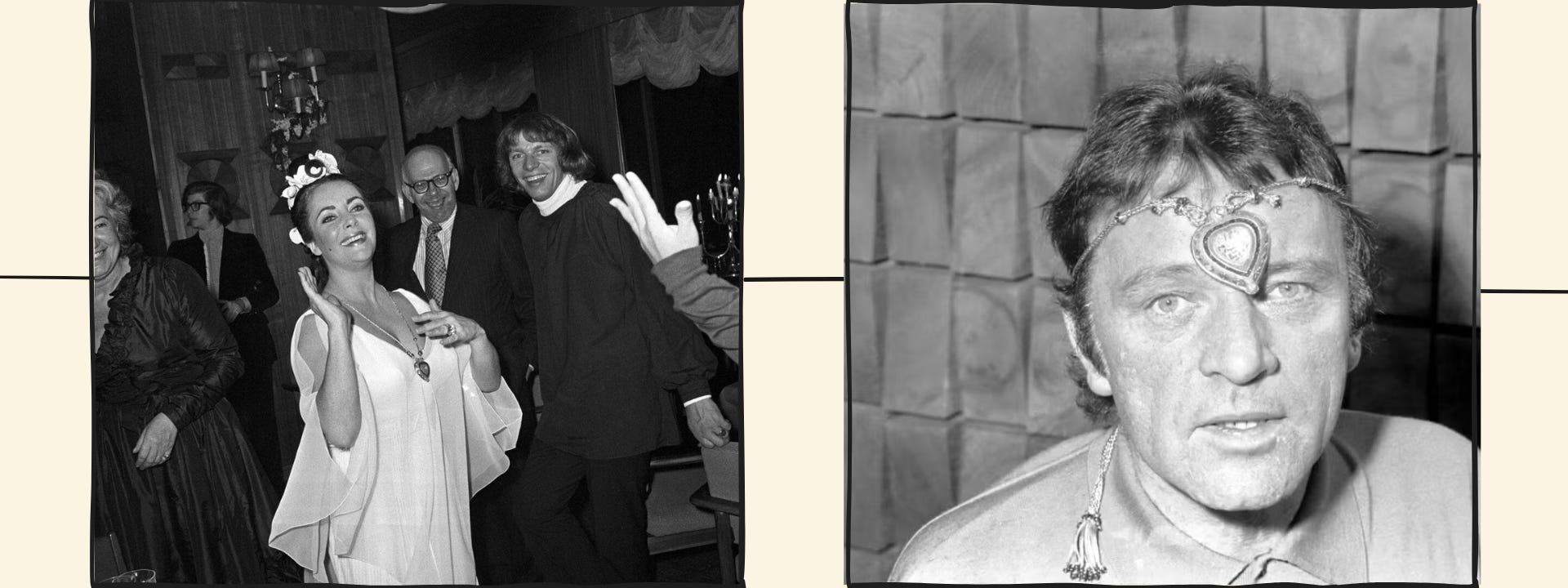
As Elizabeth Taylor’s jewel, the diamond takes on a very public life. And so does it fold into her legend; her official site lavishly scatters phrases like “rich with enduring romance” and, ”steeped in centuries-old symbolism”; it even paraphrases the inscription to include the phrase “Love is Everlasting”. This is romantic gloss, widely and freely repeated by all who talk of the diamond, and of its passage via Shah Jahan to Mumtaz. Though plausible, we have no evidence of such a journey.
Some say Nur Jahan herself might have gifted the jewel to her niece, but really- the likelihood of it being passed on to the romantic couple rests only on courtly tradition and retrospective storytelling, not any surviving Mughal inventories.
Shine On.
Nearly four centuries since it was crafted, the diamond continues to capture the public imagination- delight, fascination, outrage. Robbie, with her red carpet shashay, has inadvertently brought back debates around provenance, colonial legacies, historical framing and storytelling.
In many ways, we haven’t moved past our cultural norm of stealing with impunity. The magic of the Cartier necklace is the glory of orientalism, all the beauty, none of the humanity. from artlust here
Yet, even our modern online debates- often culturally nuanced, always impassioned- know little of the actual journey of the diamond. They are quick to call it iconic, equally swift to label it stolen. To this swirl of fact and myth, nostalgia and romanticisation, they add the indignation of time, nationhood, identity.
We are prompted, though, to take a moment; marvel at the arc of time and storytelling, which sees a towering historical figure threaded together with modern fame, oriental romanticism, celebrity culture, and keyboard warriors.
But the actual story of the Begum Padshah’s jewel, of Nur Jahan’s diamond, of Mehr-un-Nisa’s stone… that, remains lost to time.

Addenda
In December 2011, Christie’s New York auctioned the late Elizabeth Taylor’s collection. The Cartier Taj Mahal diamond necklace, estimated to value between $300-500,00 was sold for a staggering $8.8 million dollars to an anonymous buyer. Months later, the buyer asked to cancel, claiming it did not actually belong to Shah Jahan and questioning its Mughal provenance. Christie’s agreed to rescind the sale, refunded the buyer, then asked that the Taylor trust return the $7million+ it had received. The trust, of course, resisted this ‘buyer’s remorse’- the two parties have been in legal battles ever since. (Not sure whose it is to loan to Margot Robbie.)
Speculation time!
There is a theory that even though the pendant was created before Jahangir’s death, Nur Jahan might well never have worn it as empress, since she was vacationing with the Emperor in Kashmir at the time, returning to Lahore only with his dead body.
Another one? Given she wielded imperial authority, the order for the design of the pendant came from Empress Nur Jahan herself, with or without the permission of the emperor.
Apparently the Mughal ability to inscribe on the planet’s hardest stone has caused much wonder. They used a diamond-tipped stylus or cutting wheel charged with diamond powder; diamond fragments from rough stones served as the cutting medium.
Modern Western techniques use lasers, diamond-point scribes, carbon tips; these are faster and less hand-guided. Experts are impressed by the precision and aesthetics achieved, without magnification or electricity.
Fascinating reading.Thank you for allowing me to take a peep into history as well. Keep them coming. Loved it